
Cutting room transformation with P-CAM® R
supports high-mix, low-volume denim manufacturing
Akita Hose Co., Ltd.
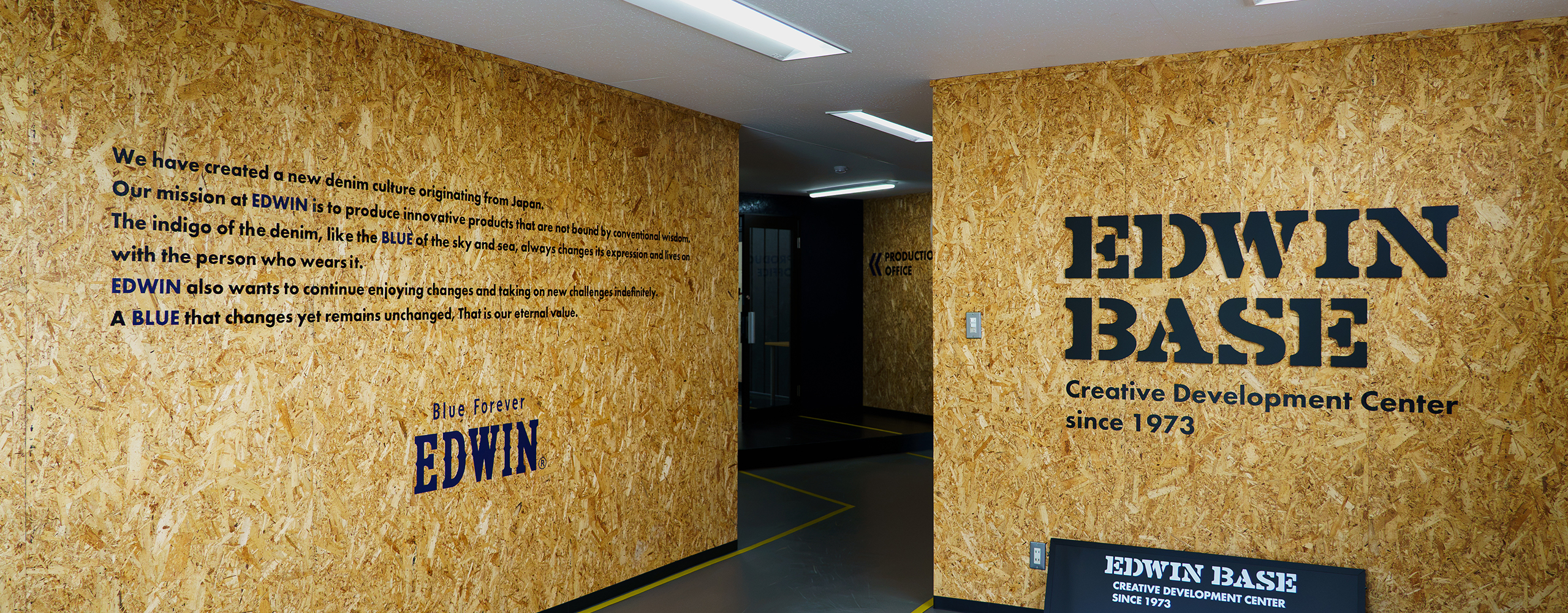
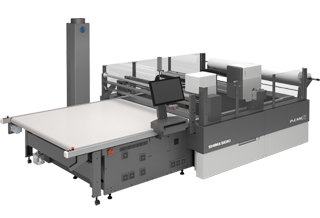
Established in 1973, Akita Hose Co., Ltd. is a sewing factory responsible for denim production for the EDWIN Group, famous for its Japanese domestic jeans brand. In October 2024, the company consolidated production equipment that had been spread across three buildings into a single facility and relaunched it as “EDWIN BASE.” The name “BASE” reflects its role as a hub that supports denim manufacturing and communicates new initiatives. At the heart of this flexible manufacturing operation is SHIMA SEIKI’s P-CAM® R automatic cutting machine that supports the cutting process.
From mass-production factory to high-value-added production base
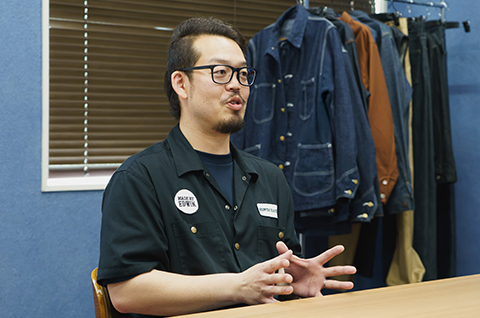
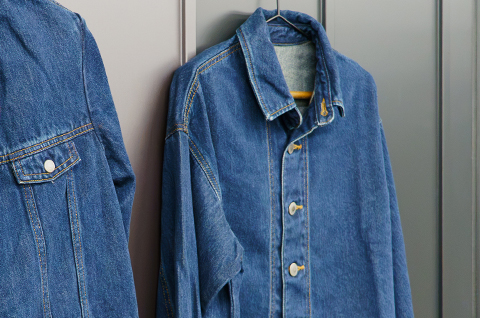
Akita Hose was once a mass-production factory where around 100 employees produced approximately 3,000 pairs of jeans per day. Plant Manager Mr. Ito explains that the factory has since evolved into a highly responsive operation that produces a wide variety of intricate products in small lots. Beginning about three years ago, the company gradually shifted its production focus from jeans to tops such as denim jackets. Today, nearly all production at EDWIN BASE consists of outerwear. The facility manufactures high-value-added denim products for EDWIN, Lee, Wrangler, SOMETHING and other brands, and also serves as a core production site for EDWIN jackets bound for overseas markets.
The factory currently employs around 30 people, and each sewing operator handles an average of six to seven processes. This multi-skilled workforce, in which each employee covers several operations, gives the factory the flexibility to handle high-mix, low-volume production runs, including lots of 50 to 100 garments, as well as jackets with many production steps.
Renewing the cutting process as part of factory consolidation
Before the renewal in 2024, production equipment was spread across three buildings, making it difficult to monitor the status of each process. Consolidating the equipment into a single building improved process visibility and enabled more efficient operations. At the same time, the company began replacing two large cutting machines that had been in use since its mass-production days.
The existing machines had a large footprint, and their age raised concerns about safety and maintenance support. The new cutting machine needed to fit into limited space, deliver the speed and precision required to cover the necessary production volume with a single unit, and work with the company’s existing CAD data.
Selecting P-CAM® R for cutting denim
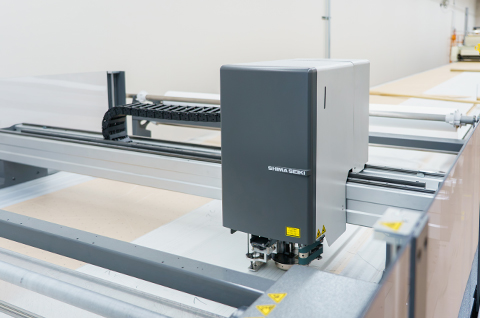
During the equipment selection process, the team inspected the actual machine’s size, cutting precision and operating speed at the Japan International Apparel Machinery & Textile Industry Exhibition (JIAM). They also visited another factory of the EDWIN Group that had already installed P-CAM® R to verify its cutting process and accuracy for denim fabric. The company decided to install the machine for its high speed, accuracy, compact footprint, compatibility with existing CAD data, as well as the quality and dependable after-sales support expected from a Japanese manufacturer.
P-CAM® R can cut specialty fabrics such as denim thanks to the enhanced rigidity of various components and such functions as distortion correction. Adjustments were required during the initial installation to suit specific cutting conditions, but SHIMA SEIKI provided ongoing support. Today, the machine operates as a core piece of equipment that reliably handles cutting of denim products.
Greater speed and safety support flexible production with a small team
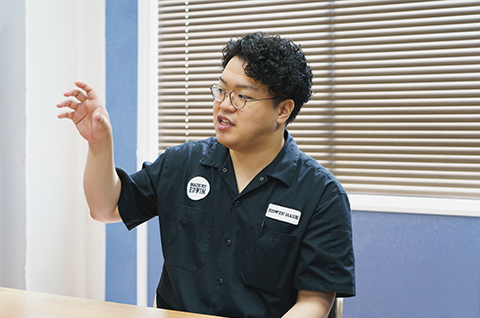
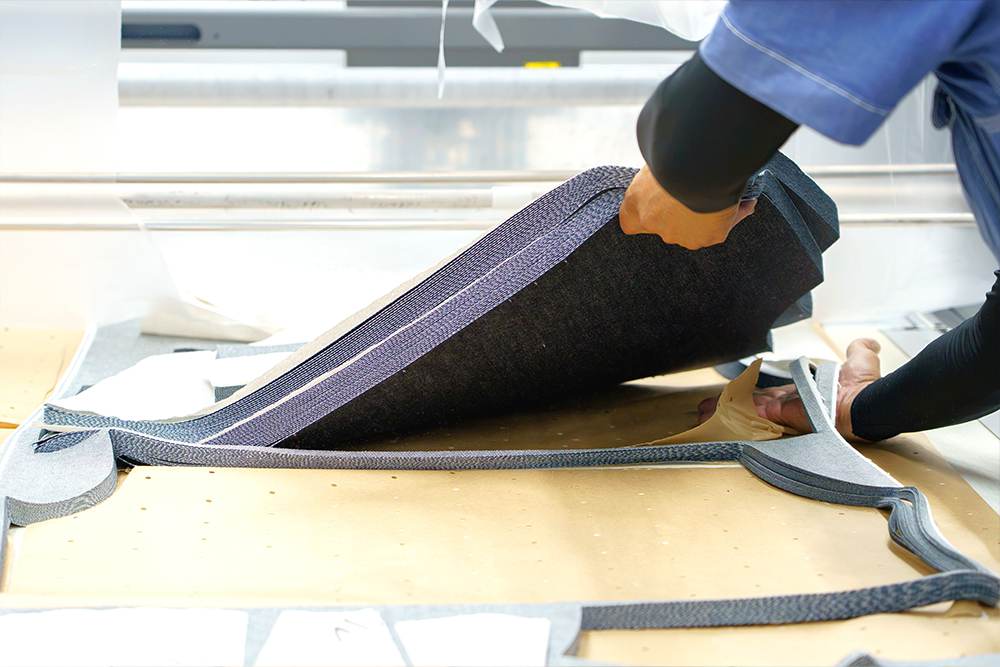
The entry prevention cover on P-CAM® R enables high-speed cutting while helping ensure safe operation. Mr. Ishikawa, who is in charge of cutting, says, “Compared with the previous machine, the greatest improvement is the increase in speed and safety.”
Previously, six or seven employees handled the work from fabric spreading and cutting through numbering and inspection. Since the launch of EDWIN BASE, three employees have been assigned to cutting, with daily operations handled mainly by one or two persons. P-CAM R has successfully inherited a production system that achieves daily output equivalent to 100 to 150 jackets with a limited workforce.
On-site support for selvedge denim
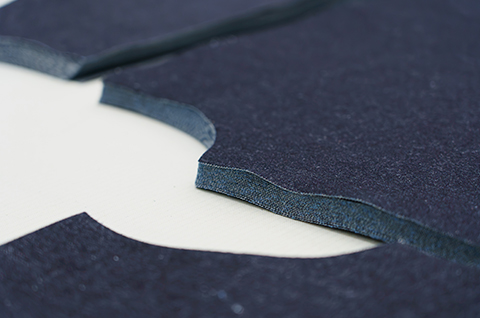
Akita Hose also handles a large volume of selvedge denim, which uses the fabric’s finished edge as a design feature. Specialized cutting that preserves the edge requires careful preparation of data and machine settings. Responding to this issue, SHIMA SEIKI proposed an operating method that switches settings on P-CAM® R, simplifying work that previously relied on third-party software to edit cutting data.
P-CAM® R’s IoT capability also allows operating status to be monitored remotely over a network. When an error occurs, SHIMA SEIKI may detect the issue and contact the factory. This remote support, backed by prompt on-site visits when needed, offers Akita Hose peace of mind.
Reducing environmental impact and advancing next-generation denim production
In addition to installing P-CAM® R, EDWIN BASE is reducing energy consumption by upgrading to LED lighting and new air-conditioning equipment and consolidating operations into one building. Denim scrap material generated during cutting are also sorted and recycled into regenerated fiber, which is then used in construction materials as well as new denim fabric. The company is also working to meet environmental and safety standards emphasized in overseas markets.
The company plans to further develop its multi-skilled workforce and expand automation, with the goal of creating a factory that can generate high added value with a small team. EDWIN BASE is not only a production facility, but also a “base” from which it communicates the appeal of denim and the value of manufacturing through factory tours and workshops. P-CAM® R will continue to support this flexible and sustainable manufacturing operation through the cutting process.
Products Featured in This Case Study

Akita Hose Co., Ltd.
| Established | 1973 |
| Location | Akita, Japan |
| Type of business | Sewing of denim products |
| URL | https://edwin.co.jp/topics/factory_edwinbase.html |
We can tailor solutions to fit each customer's requirements.
Please feel free to contact us.
TOP>Products>Client Testimonial>Akita Hose Co., Ltd.